The nature of modern-day threats is shifting fast, and so should the gear designed to protect against them. In 2025, security professionals are facing more dynamic, layered, and unpredictable situations than ever before. From fast-moving urban unrest to criminal organisations using military-grade weapons, the risks are more complex, and often more subtle, than what many traditional setups were built to handle.
In this post, we’re unpacking the biggest shifts we’re seeing across high-risk environments and why your gear needs to do more than just tick a box on paper. We’ll cover the emerging threats shaping the tactical landscape, the growing demand for discreet protection, and why ballistic protection must now be paired with trauma, stab, and impact resistance to meet today’s operational needs.
Whether you’re in procurement, deployment, or leadership, the question is the same: is your kit built for the work you’re doing now, or for the world as it was?
What Are Modern Security Equipment Designed to Handle?
Let’s start with what’s showing up in the field. Modern security equipment is being deployed in environments that are nothing like they were a few years ago. Theatres of operation have moved beyond traditional battlefields; now they include crowded metro stations, political protest zones, and public events. What makes these environments more dangerous isn’t just the presence of violence, but how quickly the nature of that violence changes.
We’re seeing more overlap in the types of threats teams face, from projectiles to edged weapons to blunt-force trauma, often within a single incident. And today’s gear needs to be built for that kind of reality. That’s where modern security equipment needs to prove itself: in fast-moving, multi-threat conditions where the risk is both immediate and unpredictable.
Examples of Modern Security Equipment in Action
Predictability is no longer part of the job, and your gear needs to reflect that. Teams are responding to calls with incomplete intel, working in unfamiliar zones, and needing to adapt on the fly. This means operators require more than just protection. They need comfort, mobility, and modularity, especially in high-pressure urban environments.
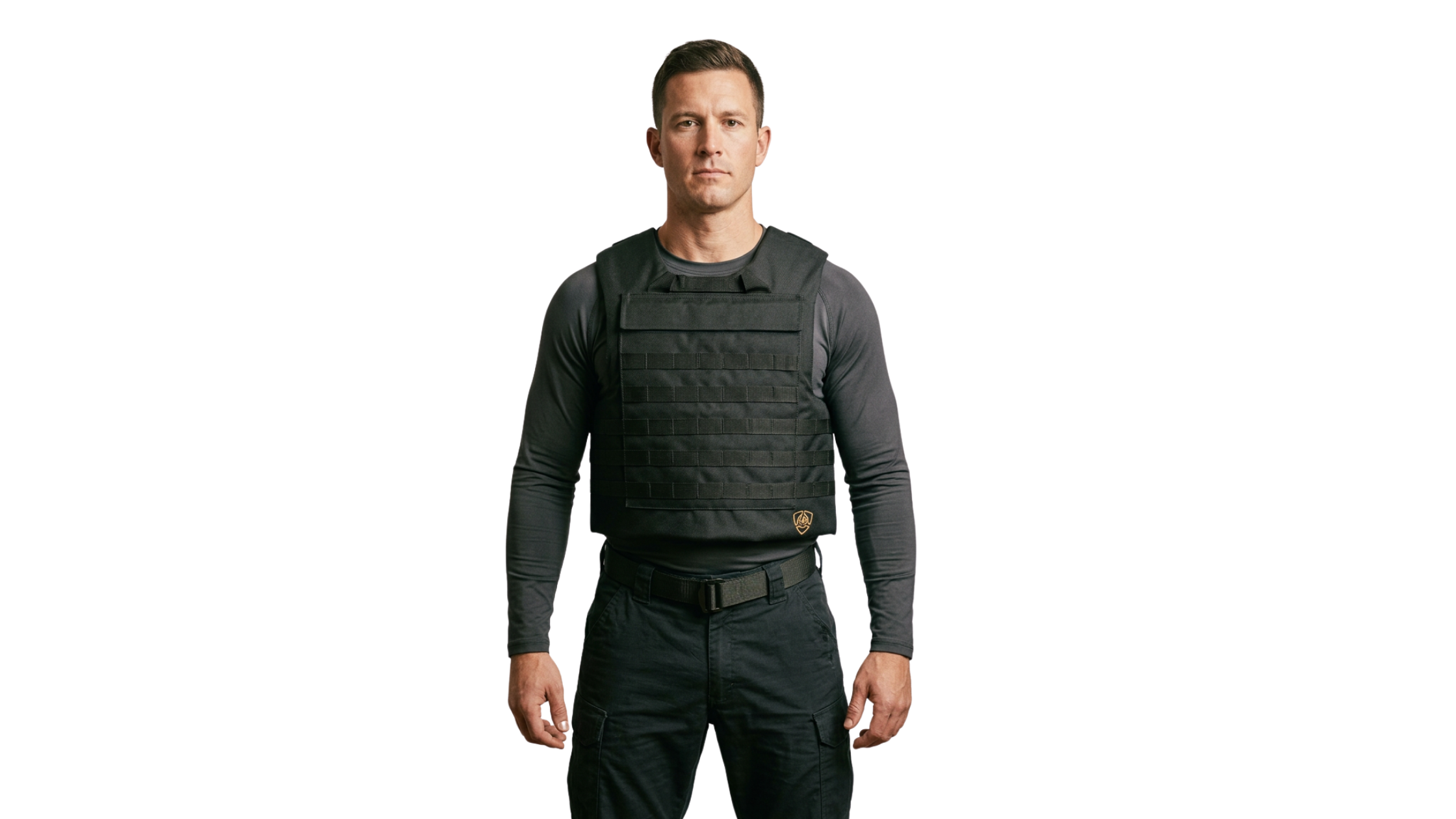
Examples of modern security equipment designed for this include adaptive plate carriers that allow for fast fit-out changes, lightweight ballistic helmets that integrate with communication devices, and full-body systems like our Armadillo Hard Torso Anti-Riot Suit. The Armadillo not only holds ballistic plates for high-impact threats but also includes reinforced padding to absorb and disperse blunt force, ideal for riot control and crowd suppression scenarios. These aren’t nice-to-haves. They’re becoming baseline requirements for operational readiness in 2025.

Body Armour of the Future Needs to Disappear, Not Stand Out
High-visibility tactical gear has its place, but in many urban or civilian settings, it can do more harm than good. Standing out doesn’t just draw attention; it can escalate tension, compromise operational effectiveness, and in some cases, increase the risk of targeted violence.
For example, in the cash-in-transit industry, it’s not uncommon for officers or drivers wearing overt armour to be deliberately shot in the head; attackers assume the torso is protected and aim elsewhere. In contrast, covert armour offers a strategic advantage. When protection is hidden, the assumption of vulnerability can reduce the likelihood of fatal targeting.
That’s why the body armor of the future prioritises discretion as much as performance. Today’s covert vests are built to sit flush under standard clothing, offering certified ballistic protection without giving away the wearer’s defences. For close protection teams, undercover law enforcement, and high-risk urban deployments, concealment is often the first layer of safety.
Modern Body Armour Starts with the Basics, and Builds From There
Ballistic protection is still a non-negotiable, but modern body armour has to cover more than just bullets. With the increasing overlap of threats, gear now needs to defend against edged weapons, blunt impact, and unpredictable close-contact force.
The best modern body armour does all of this without sacrificing weight, comfort, or flexibility. At Imperial Armour, our plate systems go beyond ballistic standards, combining stab resistance and trauma padding with materials built for long-term wear. Because when things go sideways, it’s the gear that fits, flexes, and holds up under pressure that makes the difference.
Why Multi-Threat Body Armour Is Now the Standard
It’s no longer enough to carry gear that solves a single problem. Today’s environments demand equipment that does more and does it well. Multi-threat body armour isn’t a trend or a bonus feature anymore; it’s the industry standard.
Here’s what that looks like:
- Plates and carriers built to resist ballistic, blunt, and edged threats all in one.
- Loadouts that can be scaled up or down depending on the mission profile.
- Integrated trauma protection that doesn’t bulk up the vest or reduce comfort.
Our goal isn’t to overwhelm users with unnecessary layers; it’s to make layered protection feel seamless. Whether you’re facing the risk of a stabbing, a flying brick, or a direct round, your gear should handle it all without you needing to think twice. That’s what real protection means today.
Testing and Certification That Cuts Through the Noise
With the rise of copycat gear and unverified imports, body armour certification has become one of the most important filters when choosing what to wear. But here’s the thing: not all certification is equal. And in a cluttered market, flashy branding can sometimes overshadow what really matters, proven performance.
At Imperial Armour, we’re committed to:
- Independent testing through accredited third-party labs, both local and international.
- Beyond-standard assessments, simulating realistic conditions rather than ideal scenarios.
- Ongoing improvement, using field data to refine products long after initial approval.
We’ve worked hard to earn a reputation for gear that doesn’t just pass, it protects. So when you see that Imperial Armour badge, you know what’s behind it: rigorous testing, field insight, and gear built for real-world risk.

How We’re Designing for the Real World
Protection isn’t a one-time design. It’s a process. And at Imperial Armour, that process never stops. We work side by side with operational teams, incorporating feedback from the field into every product iteration. That means fewer assumptions and more real-world accuracy.
Right now, we’re focused on:
- Faster product development cycles, so new threats don’t outpace our gear.
- More ergonomic builds, especially in helmet and vest design, to reduce fatigue.
- Lightweight, high-performance materials, so agility doesn’t mean reduced protection.
This isn’t just product development, it’s a partnership. Because we’re not just making gear, we’re making sure people come home safe.
Gear That Matches the Moment
If your team is still relying on yesterday’s protection, now’s the time to reassess. Security threats are changing, and your gear has to keep up. Whether it’s covert protection for city deployments, multi-threat systems for unpredictable risks, or certified ballistic plates that don’t compromise on comfort, we’re here to help you make the right call.
If it’s been a while since you’ve re-examined your team’s kit, don’t wait until there’s a problem. Chat to us about what kind of protection actually fits the work you’re doing today.
Get in touch – www.imperial-armour.com