Firefighters may face the same fundamental danger—fire—but the conditions surrounding each incident can differ significantly. This article dives into why choosing the right wildland firefighting PPE is so important.
Fighting a fire inside a residential, commercial or industrial building is not the same as controlling a fire spreading across open veld, forests or plantations. The heat exposure, terrain, working duration, movement requirements and surrounding hazards can all be different.
For this reason, firefighters need personal protective equipment designed for the specific environment in which they will be working.
Structural firefighting PPE is developed primarily for fires in and around buildings. Wildland firefighting equipment is designed for outdoor operations where crews may need to move across difficult terrain, work over large areas and remain on the fire line for extended periods.
Understanding this distinction is an important part of selecting the correct protective equipment for a firefighting team.
Wildland Fires and Structural Fires Are Different
Structural fires generally occur inside or around enclosed buildings, including houses, warehouses, factories and commercial properties.
These incidents may expose firefighters to intense heat, falling debris, confined spaces, smoke accumulation and rapidly changing conditions within the structure. Firefighters may also need to enter a burning building to search for occupants, control the fire or protect surrounding areas.
Structural firefighting PPE is therefore designed around the hazards associated with building fires. This typically means heavier protective clothing with multiple layers intended to provide protection against heat, flame and other structural-fire risks.
Wildland fires take place in open outdoor environments such as:
- grassland and veld
- forests and plantations
- agricultural areas
- mountainous terrain
- nature reserves
- rural and undeveloped land
These fires can spread across large distances and may change direction quickly due to wind, vegetation and weather conditions.
Wildland firefighters may spend hours walking, climbing, carrying equipment and working close to moving fire lines. Access can be difficult, vehicles may not always be able to reach the affected area and crews may need to operate far from immediate support.
The PPE used in these environments must provide suitable protection while still allowing firefighters to move, work and manage heat stress over longer periods.
Why Different Fires Require Different PPE
Firefighting equipment should never be selected simply because it is broadly labelled as fire protection.
A product designed for structural firefighting may not be the most practical option for a wildland operation. Similarly, equipment intended for outdoor vegetation fires should not automatically be treated as suitable for entering a burning structure.
The protective requirements overlap, but the operational needs are different.
Structural firefighting PPE generally prioritises protection for intense structural-fire conditions.
Wildland firefighting PPE must balance protection with:
- mobility
- breathability
- reduced weight
- prolonged wear
- outdoor temperature conditions
- visibility
- compatibility with other equipment
- the physical demands of moving across open terrain
Wearing unnecessarily heavy or restrictive equipment during a wildland operation can increase fatigue and make an already physically demanding role more difficult.
Equipment that is too light or not developed for the correct application may also leave the wearer without suitable protection.
The goal is not simply to choose the strongest or heaviest available equipment. It is to select PPE designed for the hazards, environment and tasks the firefighter is expected to face.
Wildland PPE Should Be Treated as a Complete System
A helmet, protective suit, gloves and boots should not be selected independently without considering how they work together.
Every component should be intended for the same operational environment. It should also fit correctly, remain secure during movement and allow the firefighter to perform their duties without unnecessary restriction.
A considered wildland firefighting PPE system may include:
- a purpose-built wildland fire helmet
- a dedicated wildland firefighting suit
- suitable gloves
- appropriate protective boots
- eye and face protection where required
- respiratory or additional protection based on the operation
- high-visibility and identification elements
The complete system must be assessed according to the organisation’s risk profile and operating conditions.
For fire departments, municipalities, industrial response teams and forestry operations, this means looking beyond individual product specifications and considering how the equipment will perform during real field use.
Purpose-Built Head Protection for the Fire Line
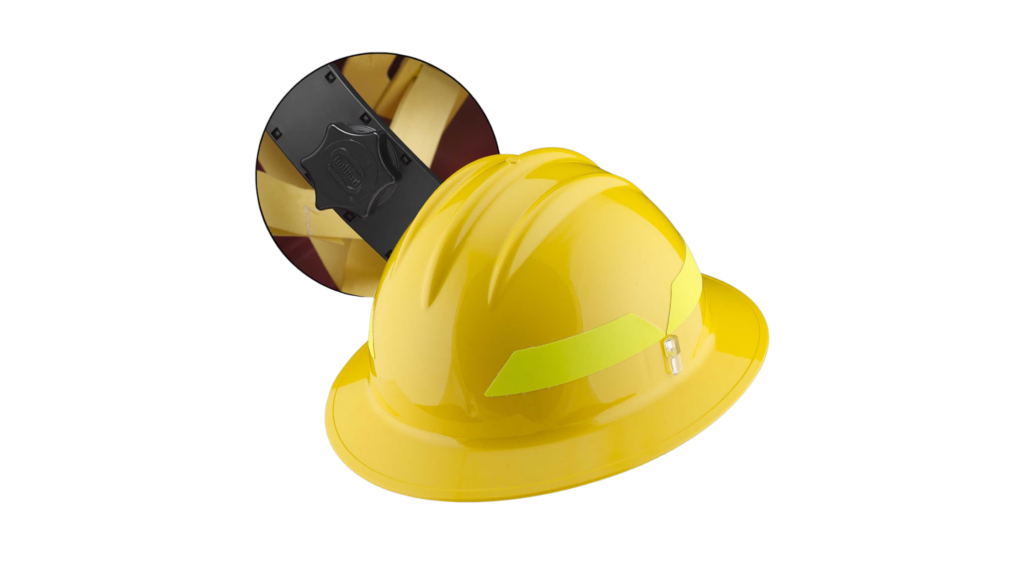
The Bullard Wildland Fire Helmet has been designed specifically for wildfire, veld-fire and vegetation-fire operations.
Unlike a helmet developed primarily for structural incidents, it has a clearly defined wildland application. This helps departments avoid relying on general-purpose firefighting equipment that may not have been developed around the mobility and prolonged outdoor use required on the fire line.
Wildland firefighters often need to:
- cross uneven terrain
- work around trees, bushes and dense vegetation
- remain outdoors in difficult weather conditions
- carry additional firefighting equipment
- move continuously across the fire line
- wear their protective equipment for extended periods
During these operations, unnecessary weight or bulk can become a serious distraction. The helmet must provide appropriate protection while remaining practical for the environment in which it will be worn.
The Bullard Wildland Fire Helmet gives teams a dedicated head-protection option that is aligned with the demands of wildland firefighting.
Why NFPA 1977 Compliance Is Important
The Bullard Wildland Fire Helmet meets and exceeds NFPA 1977 requirements.
NFPA 1977 provides requirements relating to protective clothing and equipment used during wildland firefighting. It gives procurement teams and operational leaders a recognised technical reference when assessing whether equipment has been developed for this particular application.
This matters because fire equipment should not be purchased based only on appearance, price or a general product description.
Before choosing a helmet, buyers should understand:
- the environment for which it was designed
- the relevant standard
- how it fits into the wider PPE system
- whether it is suitable for the team’s usual operations
- how it will be issued, adjusted and replaced
A recognised standard provides departments with clearer information when comparing products and reduces the uncertainty involved in selecting specialised protective equipment.
Practical Sizing for Firefighting Teams
The Bullard Wildland Fire Helmet is available in a one-size-fits-all configuration.
This can simplify purchasing and equipment management for departments responsible for larger teams. Managing several helmet sizes may complicate ordering, issuing, storage and replacement.
A one-size-fits-all configuration allows each helmet to be assigned and adjusted for the individual wearer while reducing the number of separate sizes the organisation needs to manage.
Colours are available on request, allowing departments to discuss specific operational, identification or team requirements when requesting a quotation.
Imperial Armour accommodates bulk helmet orders from five units or more and can assist organisations with requirements across its wider fire-protection range.
The Wildland Fire Suit Is Not a Structural Bunker Suit
The protective clothing used for wildland firefighting is also different from the bunker or turnout suits typically associated with structural firefighting.
A structural bunker suit is designed for firefighters working in and around buildings where they may encounter intense heat, enclosed spaces and structural-fire hazards. These suits generally contain several protective layers and are heavier than clothing intended for wildland use.
A wildland fire suit is designed specifically for wildfire, veld-fire and vegetation-fire response.
It has one less layer of material than a structural bunker suit, helping create a lighter and more practical garment for firefighters who need to move over long distances and work outdoors for extended periods.
This does not mean that the suit is simply a reduced version of structural PPE. It is a different protective solution developed around a different operating environment.
The design must account for the challenges commonly associated with wildland firefighting, including:
- prolonged physical activity
- high outdoor temperatures
- heat stress
- long periods of wear
- changing weather conditions
- difficult terrain
- the need for unrestricted movement
Using a dedicated wildland suit helps ensure the firefighter’s clothing is better aligned with these working conditions.
Imperial Armour Wildland Suit Options
The Imperial Armour Wildland Suit is developed for firefighters operating in open outdoor environments.
The suit is manufactured from material that meets NFPA 1971 standards and includes reflective tape to support visibility.
It is available in two configurations:
Single-Layer Wildland Suit
The single-layer suit provides a lightweight and breathable option for wildland firefighting operations.
Its reduced bulk can support mobility during prolonged outdoor work, particularly where firefighters need to walk, climb or carry equipment across difficult terrain.
Double-Layer Wildland Suit
The double-layered option incorporates an additional thermal barrier.
This gives departments another option when assessing the balance between thermal protection, mobility and the conditions in which their teams are expected to operate.
The correct configuration should be selected according to the organisation’s risk assessment, operating environment and internal PPE requirements.
Managing Heat Stress and Operational Fatigue
Heat stress is an important consideration during wildland firefighting.
Firefighters are not only exposed to heat from the fire. They may also be working in direct sunlight, high ambient temperatures and physically demanding conditions while wearing protective clothing and carrying equipment.
PPE that is unnecessarily heavy, restrictive or poorly suited to the application can contribute to fatigue.
As fatigue increases, it may affect:
- movement
- concentration
- reaction time
- communication
- physical endurance
- the wearer’s ability to complete operational tasks
Wildland firefighting equipment must therefore support the wearer for the full duration of the operation, not only during the initial response.
This is one of the key reasons purpose-built wildland helmets and protective suits should be considered instead of automatically issuing structural firefighting PPE for every type of fire.
Selecting the Right Wildland Firefighting PPE
Every department and response organisation has its own operational requirements.
Before selecting wildland firefighting PPE, procurement teams should consider several factors.
Where Will the Equipment Be Used?
Wildland firefighting covers several environments, including open veld, forestry areas, plantations, farms and mountainous terrain.
Understanding where the team normally operates helps identify the practical demands that will be placed on the equipment.
What Type of Fire Will the Team Be Responding To?
Teams should clearly distinguish between equipment intended for structural incidents and equipment intended for outdoor vegetation fires.
One set of PPE should not automatically be treated as suitable for every application.
Does the Equipment Meet the Relevant Standard?
The organisation should confirm which standard applies to the product and its intended use.
Product claims should be supported by clear technical information rather than broad descriptions of quality or protection.
How Will the Equipment Work as a System?
The helmet, suit, gloves, boots and other protective items should be considered together.
Departments should assess compatibility, fit, mobility and whether the complete system is appropriate for the expected operation.
How Long Will the Equipment Be Worn?
Wildland firefighters may remain on the fire line for extended periods.
Weight, breathability, adjustment and wearer comfort therefore become important operational considerations.
Can the Supplier Provide Clear Guidance?
The supplier should be able to explain the product’s intended application, relevant standards, configuration options and ordering requirements.
Any uncertainty should be addressed before the equipment is purchased or issued.
Building a More Appropriate Wildland Protection System
The Bullard Wildland Fire Helmet and Imperial Armour Wildland Suit are designed to address different parts of the same operational requirement.
The helmet provides purpose-built head protection for wildfire and veld-fire response, while the suit gives teams a protective clothing option developed around movement, outdoor work and the challenges of prolonged fire-line operations.
When selected together—and supported by suitable gloves, boots and additional equipment—they help departments build a more coherent wildland firefighting PPE system.
The most appropriate solution will depend on the organisation’s environment, team size, risk assessment and operational procedures.
Imperial Armour works with fire departments, municipalities, forestry teams, industrial response units and other organisations to identify protective equipment suited to their requirements.
To discuss the Bullard Wildland Fire Helmet, Imperial Armour Wildland Suit, available configurations or bulk order requirements, contact Imperial Armour to speak to a representative.